A CFO approves a $2M automation budget in January to reduce operational overhead. By March, three separate teams have already purchased different tools—all legitimately, all approved locally by their managers, all solving the same problem differently. The CFO didn’t block them because she never saw them coming. The org chart says she controls capital spend. The reality is that by the time formal requests reach her desk, the decision has already been made in Slack channels, Jira epics, and informal networks she doesn’t touch.
No one violated policy. No one was insubordinate. The system works differently from what the org chart describes. The real operating model lives somewhere else entirely: in the daily decisions managers make when no one is watching, in the workflows that tools and AI have quietly rewired, in the informal networks where work actually gets done, and in the gaps where the official plan stops. The mismatch between the neat lines on paper and the messy reality on the ground is where execution breaks down—not because people are confused, but because the system they’re asked to operate in no longer matches how work actually flows.
This matters because you’re budgeting, hiring, and firing based on a map that doesn’t show the terrain. You’re solving problems in meetings that were already solved three levels down, but never documented. You’re measuring productivity with metrics that capture output but miss the coordination tax, the decision debt, and the innovation capacity bleeding away in invisible gaps. The cost shows up as slower cycle times, rising rework, and a quiet sense that the strategy is “right,” but the company still isn’t moving.
The Map Is Not the Territory
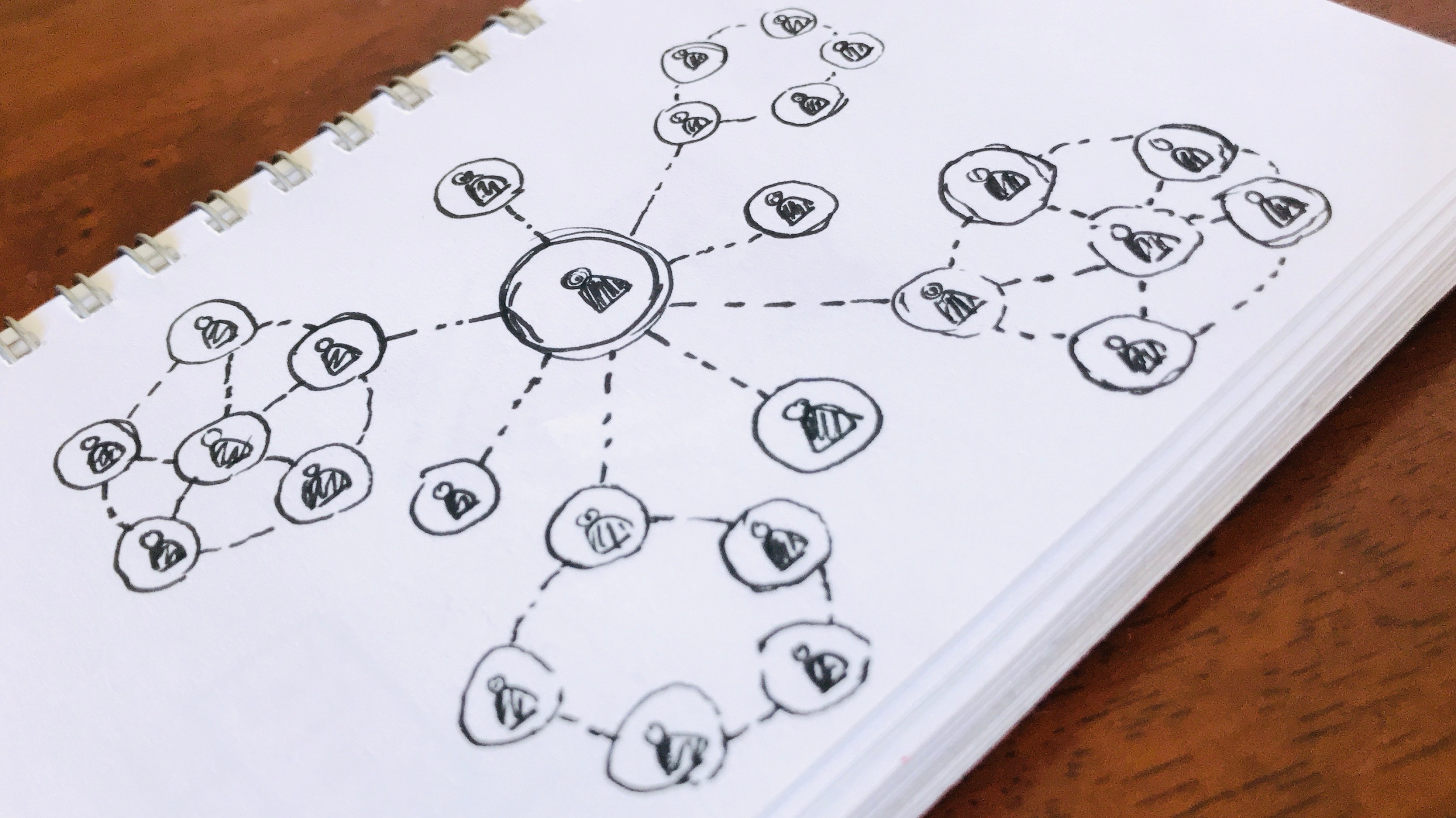
The org chart is a normative document. It says who should decide what. It doesn’t say who actually decides, or how fast, or with what information. Research across organizations shows that informal networks—the ones not captured on any chart—handle a significant portion of critical coordination and decision-making[1]. When you factor in hybrid and remote work, those informal pathways become even more dominant, because the physical cues and hallway conversations that once reinforced the chart are gone[2][3].
Workflows are even more misaligned. Your strategy document might assume a quarterly planning cycle, but your teams are responding to AI-generated suggestions, Slack notifications, and Jira tickets that update hourly. McKinsey’s work on operating model redesign makes a clear point: most companies have not updated their core workflows to match the speed of AI and the complexity of distributed teams, which means execution happens in a system that was never designed for it[4]. The result is coordination overhead that doesn’t show up on any budget line but consumes 20–30% of productive time, with 90% of high-productivity workers reporting that AI actually creates more coordination work, not less[5].
The network structure of work has also shifted. Strong ties—your direct team—remain stable, but weak ties, the cross-functional connections that drive innovation and solve ambiguous problems, have atrophied in remote and hybrid settings. A rigorous Nature study of over 48,000 IT professionals found that hybrid work reduced the quantity of innovative ideas by 22%, and work-from-home reduced idea quality by 9–18 percentage points, largely because weak ties eroded and coordination costs spiked[6]. The org chart assumes those ties exist and function. In practice, they don’t, and no one has been assigned to rebuild them.
Four Signals From the Same System
Your first four articles each diagnosed a different crack in the foundation. Looked at together, they are not separate problems. There are four data points from the same faulty operating model.
Clarity decay happens because the decision architecture is missing. People don’t know who owns which call, so they guess, wait, or escalate, and the translation layer collapses under the load. Gallup’s 2024 meta-analysis shows that improving clarity of expectations from current levels to best-practice levels drives a 9% increase in profitability and an 11% improvement in work quality[7]. The inverse is true: ambiguity generates measurable drag.
Manager overload is the translation layer breaking. Managers are asked to coordinate, decide, and translate across a system that no longer has clear decision rights or workflow standards. Only 31% of managers report being engaged at work, the same dismal rate as frontline employees, because they’ve become human APIs for a broken system[8][9].
AI busyness accelerates the mismatch. AI enables faster local decisions, but without a shared decision architecture, those decisions conflict, creating more rework and review loops, not less. McKinsey’s research on AI integration confirms that organizations deploy AI to accelerate decision-making faster than they redesign decision rights and governance, which increases variability rather than reducing it [2][5].
Innovation debt shows what happens when weak ties and tacit knowledge transfer—the informal network—are allowed to erode. MIT researchers found that remote work led to a 38% drop in weak ties, resulting in over 5,100 lost connections in 18 months [10]. The formal model assumes innovation happens somewhere; the real model shows it’s not happening at all[6].
The pattern is clear: the operating model you have on paper assumes clarity, capacity, and connectivity that the real operating model no longer provides. The result is an execution system that looks good on board decks but fails in practice.
The Real Org Chart Lives in Decisions, Workflows, Roles, and Networks
If you want an operating model that works, you need to map and manage four things that the org chart ignores.
Decision architecture. Identify the 15–20 recurring decisions that actually move your strategy. For each, define the owner, the escalation threshold, the required data, and the review cadence. McKinsey’s research on operating model redesign emphasizes that explicit decision rights reduce friction and speed execution by up to 30% when combined with clear workflow standards[4][11].
Workflow reality. Trace how work actually flows from intent to outcome. Not the process map—the real sequence of handoffs, approvals, tools, and checkpoints. Where does the work stall? Where do people create workarounds? Those are your real process bottlenecks, not the ones documented. High performers are three times more likely to fundamentally redesign workflows rather than layer AI onto existing processes [12].
Role load. Look at what people actually spend time on, not what their job description says. If managers are spending 60% of their week in coordination and admin, they are not managing—they are acting as a human API for a broken system. The role needs to be redesigned, not the person[8][9].
Network health. Map who talks to whom, especially across functions and levels. Use simple network surveys or analyze collaboration metadata (Slack, Teams, GitHub) to see where weak ties are thinning. Innovation and problem-solving cluster where networks are dense and diverse; if your network is siloed, your execution will be too[6][10][13].
What Now
If your operating model is lying, the fix is not another reorg. It’s redesigning the system to match reality. Start by auditing your decision architecture: list the 15–20 critical decisions that drive execution, assign explicit owners and thresholds, and make them visible in your project management tools so people know where to go[4]. Map one critical workflow end-to-end—pick a process causing pain, trace the actual steps and handoffs, and redesign it with decision points and accountability embedded, not implied[11].
Rebalance the manager’s time by surveying how they spend their week. If coordination exceeds 40%, reduce the administrative load and the span of control. Increase time for judgment, development, and network building[8][9]. Cultivate weak ties through structured programs: virtual coffee rotations, cross-functional project assignments, or mandatory in-office days for collaboration-intensive teams. Make network density a performance metric for senior leaders[6][10].
The organizations that treat their operating model as a living system—continuously mapped, measured, and redesigned—preserve coherence as complexity rises. The ones that don’t watch execution break down one misaligned decision at a time.
Most executives believe they are running the company. In practice, they are managing the friction created by a system that no longer fits the work. The real work of leadership is not making better decisions within a broken model—it is redesigning the model, so better decisions become possible.
Sources
[1] Vorecol. (2024). The Role of Informal Networks in Shaping Organizational Climate During Change Management Initiatives. https://vorecol.com/blogs/blog-the-role-of-informal-networks-in-shaping-organizational-climate-during-change-management-initiatives-152699 – Research synthesis showing 80% of organizational communication occurs through informal networks; 70% of change initiatives fail without informal network engagement.
[2] When Everyone’s Aligned But Nothing Executes. The Benchmark. https://thebenchmark.co/nothing-executes/ – On AI adoption requiring fundamental workflow redesign and perception gaps between CFOs and boards on strategic priorities.
[3] Microsoft. (2022). Great Expectations: Making Hybrid Work Work – Work Trend Index. https://www.microsoft.com/en-us/worklab/work-trend-index/great-expectations-making-hybrid-work-work – 59% of hybrid employees and 56% of remote employees report fewer work friendships; weak tie decline data.
[4] McKinsey. (2025). The New Rules for Getting Your Operating Model Redesign Right. https://www.mckinsey.com/capabilities/people-and-organizational-performance/our-insights/the-new-rules-for-getting-your-operating-model-redesign-right – Decision architecture and workflow redesign reduce friction by 30%; twelve-element “Organize to Value” system.
[5] Asana. (2025). The AI Super Productivity Paradox. https://asana.com/resources/ai-super-productivity-paradox – 90% of super productive workers say AI creates more coordination work; 62% report quality issues requiring rework.
[6] Siemroth, C., & Margaritis, M. (2024). Employee innovation during office work, work from home and hybrid work. Nature Scientific Reports, 14, 15405. https://www.nature.com/articles/s41598–024–67122–6 – Rigorous study of 48,000+ IT professionals showing 22% drop in idea quantity during hybrid work and 9–18% quality decline during WFH, linked to weak tie erosion.
[7] Gallup. (2025). The Great Detachment: Why Employees Feel Stuck. https://www.gallup.com/workplace/653711/great-detachment-why-employees-feel-stuck.aspx – 2024 Q12 meta-analysis: improving clarity of expectations leads to 9% profitability increase and 11% work quality improvement.
[8] Gallup. (2024). The Manager Experience in 2024. https://www.gallup.com/workplace/653711/manager-experience-2024.aspx – Manager engagement at 31%, same as frontline workers; overload and span of control data.
[9] Gallup. (2025). Anemic Employee Engagement Points to Leadership Challenges. https://www.gallup.com/workplace/692954/anemic-employee-engagement-points-to-leadership-challenges.aspx – Employee engagement at 30% in 2024; only 47% know what’s expected of them.
[10] MIT News. (2022). Analysis of Email Traffic Suggests Remote Work May Stifle Innovation. https://news.mit.edu/2022/remote-work-may-innovation-0901 – MIT study showing 38% drop in weak ties, 5,100+ lost connections over 18 months during remote work.
[11] McKinsey. (2025). A New Operating Model for a New World. https://www.mckinsey.com/capabilities/people-and-organizational-performance/our-insights/a-new-operating-model-for-a-new-world – Case studies on operating model redesign, clarity/speed/skills/commitment outcomes.
[12] Duperrin, B. (2025). The Impact of AI in Business: What the Reports Show. https://www.duperrin.com/english/2025/12/08/impacy-ai-transformation-bcg-mckinsey/ – Analysis of BCG and McKinsey reports showing high performers 3x more likely to redesign workflows.
[13] Deloitte. (2024). Organization Network Analysis: Harnessing the Power of Networks. https://www.deloitte.com/us/en/services/consulting/blogs/human-capital/harnessing-organization-network-analysis.html – Network science applied to organizational analysis; informal influencers and onsite density metrics.